re-(t)exHile is an ongoing artistic research project that examines the environmental, socio-cultural, and economic impacts of the global textile waste crisis. Born out of the 2024 Lagos Biennale, the project reflects on the consequences of fast fashion, overproduction, and the mass export of second-hand clothing from the Global North to the Global South.
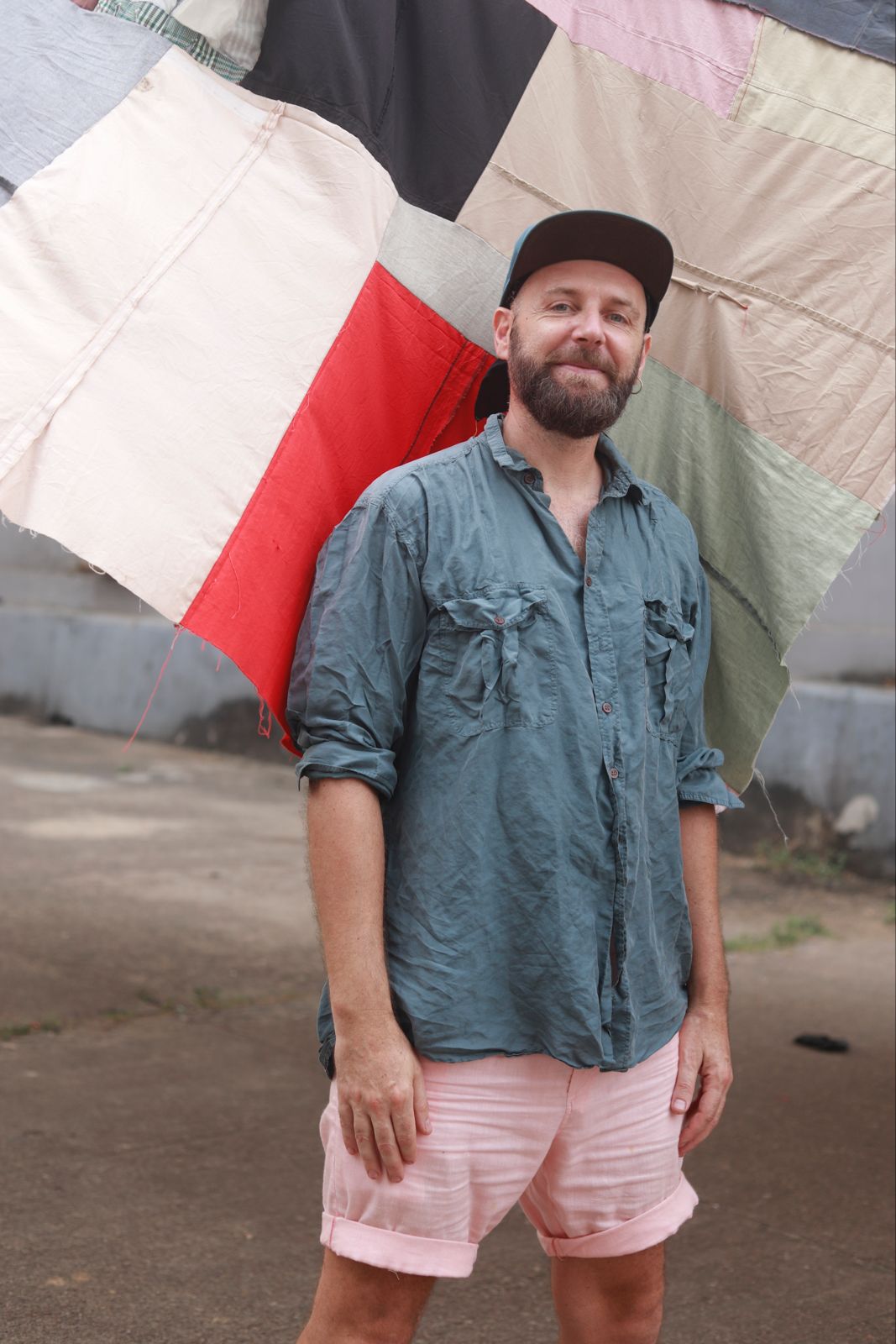
The project began with a large-scale textile installation created from nearly 500 second-hand garments sourced from Katangua Market in Lagos, Nigeria. Through a collaborative sewing process with local participants, the work became both a material and symbolic gesture of repair.
In June 2025 re-(t)exHile expanded to Trnava, Slovakia, marking its first European chapter. This iteration reintroduced the textile installation to the Global North, reversing the usual flow of textile waste. Raising questions about responsibility and highlighting Europe’s critical role in the fast fashion system and its resulting waste streams.
In October 2025, re-(t)exHile unfolds in Oslo in collaboration with KORO. Installed at Deichman Bjørvika Library, the project hosts an international gathering, creating a space to reflect, exchange, and engage with participants from diverse backgrounds while questioning dominant narratives of responsibility and sustainability in the Global North.
Through collective sewing with design students from KHiO, volunteers of different ages and backgrounds, and groups such as Sydilla, the work expands as new textile sections join the original installation from Lagos.
In November, the project will travel to the Atacama Desert, one of the main global destinations for discarded textiles from the fashion industry. As part of the ongoing research, these textiles will be integrated into the installation for exhibition at the Museo de la Memoria y los Derechos Humanos in Santiago de Chile, creating a space to reflect on environmental, social, and colonial impacts of global textile waste. The expanded piece will return to Oslo and culminate in a performative action at City Hall where fragments from Lagos, Trnava, Oslo, and Atacama are brought together—a gesture that highlights the repeated extractive and colonial patterns in fashion while opening space for reflection and dialogue about collective responsibility.